Sharing a home with an animal starts quietly. A few months in, you stop noticing the obvious changes — the bowl by the kitchen door, the leash on the hook, the bed that somehow migrated three feet to the left.
What’s left after that is quieter, and harder to name. Sharing a home with an animal doesn’t just add a routine to your life. It slowly reshapes the space itself, the sound of it, the smell of it, and the rhythm you move through without meaning to. Over time, sharing a home with an animal becomes less about caring for a pet and more about living alongside another presence.
Most people never sit down and think about this directly. It happens in the background, one small accommodation at a time, until one day the home simply feels different than it did before, and you can’t quite say when that started.
The Corner That Became Theirs Without Anyone Deciding It
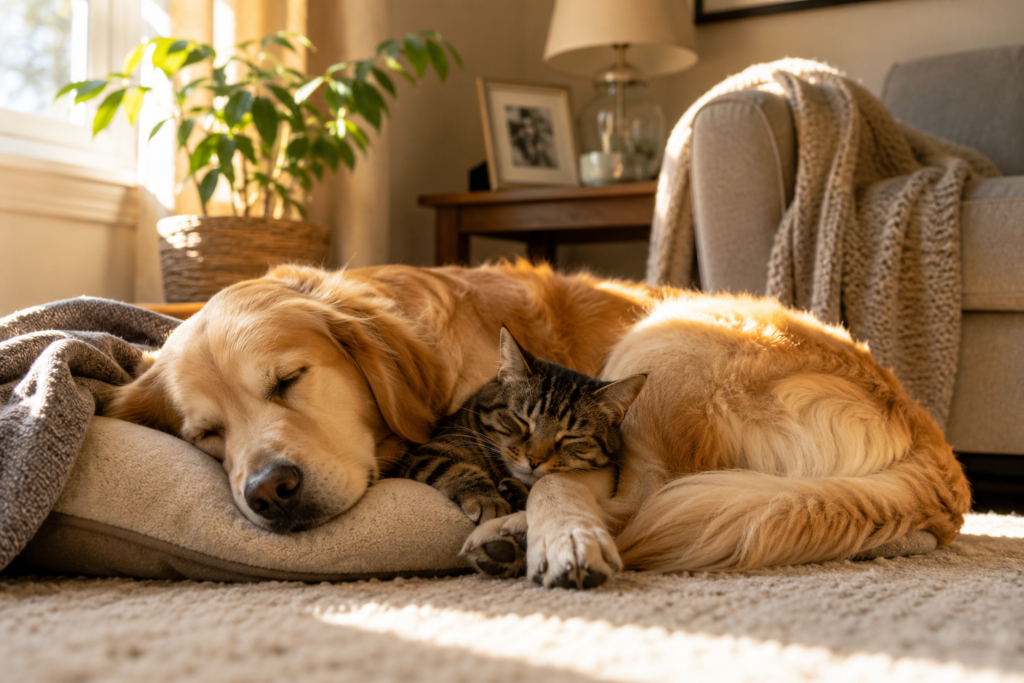
Every home with an animal in it has one. A patch of couch. A specific stretch of hallway floor that catches the afternoon sun. The far corner of the office, just out of the way of foot traffic but close enough to hear everything. No one picked this spot on purpose. It got chosen slowly, through repetition, until eventually it stopped being a spot and started being theirs.
What’s strange is how quickly the rest of the house adjusts around it. You start stepping over that corner without thinking. You leave the blanket there instead of folding it away. The space stops being neutral floor and becomes something closer to furniture—an unofficial fixture that was never actually installed.
The Sounds You Stop Hearing Until They’re Gone
Claws on hardwood. A particular exhale before settling down. The soft thud of four paws landing after a jump you didn’t even see happen. None of these register as sound after a while; they register as background, the same way a ceiling fan or a distant road eventually disappears from awareness.
That’s what makes the quiet moments strange—the ones where an animal is somewhere else, boarded for a weekend or simply out of the room longer than usual. The silence isn’t neutral. It’s the absence of something specific, and it’s noticeable in a way that’s hard to explain to someone who hasn’t lived with an animal long enough to stop hearing them.
The Way a Home Starts to Smell Like the Animal in It
This one is harder to admit, mostly because it sounds strange written down. But homes with animals in them develop a scent: faint, specific, and completely invisible to the people who live there every day. Visitors sometimes notice it before they notice anything else. The people who live there rarely notice it at all, until they come home from a trip and catch it fresh, as if returning to something they’d half forgotten.
It’s not something anyone chooses. It just settles in, the way most of these changes do, quietly enough that it becomes part of what home smells like rather than something separate from it.
Sharing a Home With an Animal Changes Your Daily Rhythm
Feeding times. Walk times. The specific hour an animal decides morning has officially started, regardless of what the clock says. None of this gets negotiated up front. It arrives gradually, through repetition, until an entire day is loosely organized around moments that were never actually scheduled.
People who don’t share a home with an animal sometimes assume this is a burden, something imposed from outside. It rarely feels that way from the inside. It feels more like gravity—a shape the day settles into on its own, one that would feel strange to lose even on the mornings it would be easier not to have it.
The Quiet That Waits on the Other Side of All of It
Every one of these small changes—the corner, the sounds, the smell, the schedule—exists because something else is present in the house. That presence is easy to take for granted precisely because it’s so constant, so woven into the ordinary mechanics of a day that it stops feeling remarkable at all.
Researchers studying the human-animal bond have found that relationships with companion animals become deeply woven into emotional well-being and everyday life, often in ways people barely notice until they’re interrupted.
It’s worth noticing anyway. Not out of worry, but because these small, unremarkable details are usually the ones that turn out to matter most, long after the more obvious moments have faded from memory.
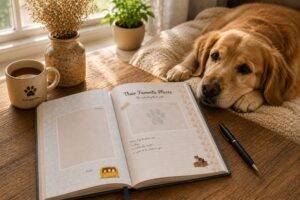
f you’d like a way of capturing these small, ordinary moments, writing them down before they disappear into routine can become a quiet gift to your future self.
Because one day, without realizing exactly when it happened, the house no longer feels like a place you share with an animal. It simply feels like home because they are part of it.
Questions People Often Carry
How long does it take for an animal to actually feel like part of a home?
There’s no fixed timeline, but most people notice the shift somewhere between a few months and a year in, once the small routines stop feeling new and start feeling automatic.
Why do I only notice these small habits when my pet isn’t around?
Familiar, constant things tend to fade into the background of daily life. Their absence is what brings them back into focus, since silence and empty space are far easier to notice than presence ever is.
Is it normal to structure my whole day around my pet’s routine?
Yes. It’s one of the clearest signs of how deeply an animal becomes part of a household. Most pet owners describe it less as a constraint and more as a rhythm that simply feels right.
A home isn’t shared all at once. It becomes shared through the ordinary moments no one thinks to remember while they’re happening.