
When people lose a pet, they rarely say they wish they had more photographs. They say they wish they remembered the little things better: the exact sound of the paws in the hallway, the way the tail thumped against the sofa, the particular face made at the sight of the leash. Photographs hold how a pet looked. They do not always hold how it felt to live beside them.
The big moments are the ones we keep
Most of us remember the day we brought them home, the first snow, the birthday with the cake made of dog biscuits. These moments get told and retold, so they stay sharp.
The ordinary days do not get retold. They are too familiar to mention, and that is precisely why they slip away first.
What people wish they had written down
Ask anyone who has lost a pet what they miss, and the answers are rarely grand. They tend to be small and specific.
- The sound they made when you came through the door.
- The weight of their head on your knee.
- The way they asked for dinner, a full ten minutes early.
- The smell of their fur after a walk in the rain.
- The funny habit that only you ever noticed.
We have written before about why your home starts to smell like your pet and about why silence sounds different after a pet is gone. Both come back to the same thing: it is the sensory details that make a pet feel present, and they are the hardest to bring back later.
Memory softens, and that is normal
Memory is not a recording. It keeps the outline and lets the details blur, which is a kind way for the mind to work and a frustrating one when you want the detail back.
You cannot stop it, but you can give it help. A few sentences written while the detail is fresh will say more, years from now, than any amount of trying to remember.
You do not need to write well
Many people put off writing about their pet because they think it has to be good. It does not. A line such as “Today he stole a sock and was very proud of himself” is perfect. It is exactly the kind of sentence you will be glad of.
Notice how a pet changes how you notice time. They make the day feel smaller and more attentive. Writing down one thing from each day gives that attention somewhere to live.
Starting with one question
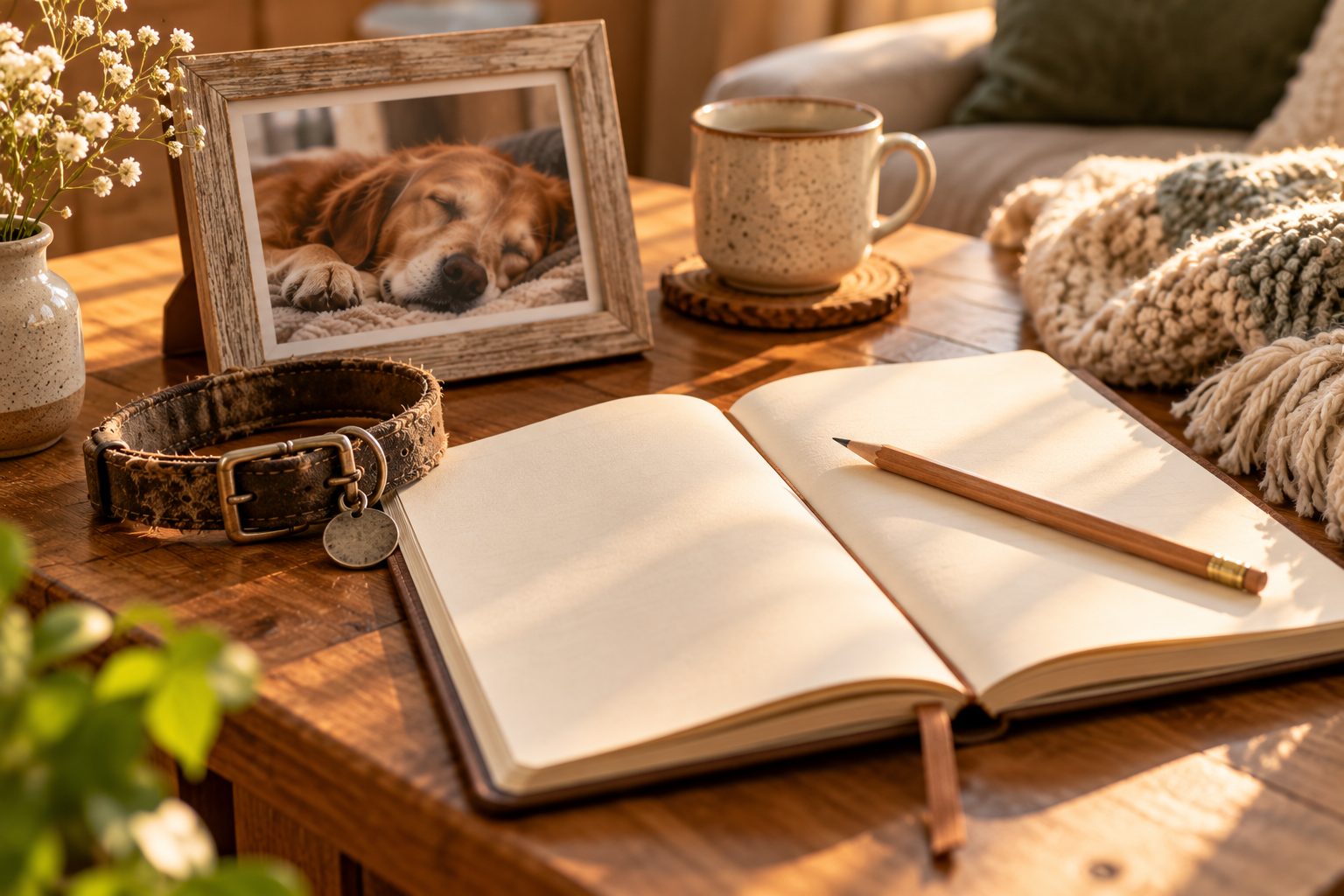
The hardest part is the blank page. It helps to start with a single question and answer it honestly. Some good ones:
- What does your pet do every day at the same time?
- What would a stranger need to know to recognize them with their eyes closed?
- What is the one thing they do that nobody else’s pet does?
A place for all of it
If you would like a gentle structure, our Pet Memory Journal was made for this. It has guided prompts that help you find the words, space for photos, and room for both the milestones and the quiet moments in between. It is for someone who has just brought a pet home and wants to begin at the beginning, and for someone who knows they would hate to forget.
Questions People Often Carry
Is it too late to start if my pet is older? No. You can write down the years behind you as well as the days ahead, and the details you remember now are worth keeping.
What if I am afraid writing will make it harder? Some people find it eases things to have the memories safe somewhere. Go at your own pace, and keep to the happy details if that is what feels right.
How often should I write? As often as you like. A line once a week is more than most people manage, and it adds up.
One small thing to do today
Pick one habit your pet has that you have never written down, and write it in a sentence. Then add the date. That is the whole exercise, and it is the start of a memory you will not have to rebuild later.
“The details we think we will never forget are the first ones to go quiet.”