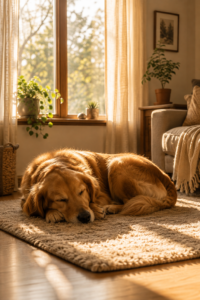
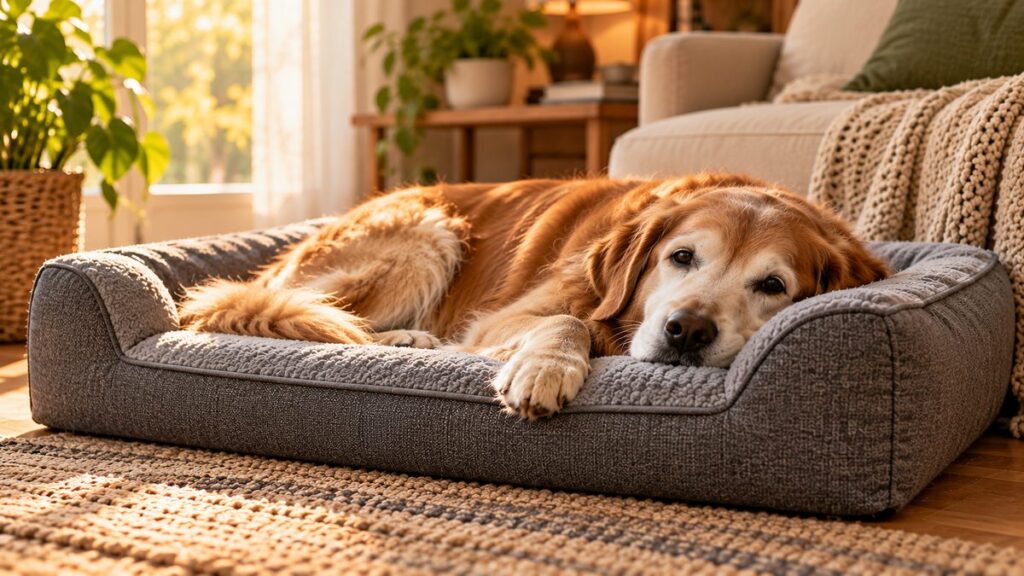
The best dog bed for older dogs is rarely the prettiest one in the shop. It is the one your dog can get onto without thinking about it, and get up from without a pause. You usually notice the need before you name it: a moment at the edge of the bed, a slower turn, a dog who used to circle twice and now simply lowers himself down.
The signs that arrive quietly
Older dogs seldom make a fuss. What they do is change small things, and the changes are easy to miss because they happen gradually.
He hesitates before stepping onto the sofa. She chooses the cold floor beside her bed instead of the bed. He sleeps in a different position, or shifts more in the night, or takes longer to get up in the morning and stands for a moment before the first step. None of this is dramatic. All of it is information.
If you notice any of it, a vet is the right person to ask about comfort and joints. A bed does not replace that conversation, but it can make the hours between visits easier.
What an older dog’s bed actually needs to do
A bed for a senior dog has a short list of jobs, and none of them are about looks.
It needs to support the body. A thin, soft cushion feels comfortable for a moment, then collapses under the weight of the hips and shoulders, so the dog is effectively lying on the floor. A firmer base keeps the joints from sinking.
It needs to be easy to get onto. A bed with a very high rim can be a small obstacle for a stiff dog, and one with a lower edge on at least one side is kinder.
It needs to be stable. A bed that slides on a smooth floor makes getting up harder, so a surface that stays where it is matters more than it sounds.
And it needs to be big enough. Older dogs often stretch out more than they used to, because curling tightly can be uncomfortable. Measure your dog lying down, from nose to tail, not standing up.
Why an orthopedic bed is built the way it is
An orthopedic dog sofa bed is made around exactly those needs. It has a supportive base so the body does not sink through to the floor, a flat sleeping surface with raised sides to lean against, and an overall shape that lets a dog lie out comfortably or tuck in, whichever they prefer on the day.
The raised sides are worth a moment. Many older dogs like something to rest their chin on, and the same edge gives a feeling of being held, which is calming for a dog who is a little less sure of the floor than he used to be.
It is not the only kind of good bed, and it is not necessary for every older dog. But for a large dog, a dog with stiff mornings, or one who has started to avoid his old bed, it is a sensible place to begin.
Where to put it
Older dogs still want to be part of the house. A bed in a distant room can feel like being sent away, even if it is the quietest spot, so it is worth placing it where the household passes: beside the sofa, near the kitchen, close to your bedroom door.
Think about the floor as well. A bed on tile or hardwood is cold in winter, and a smooth floor is harder for stiff legs to push against. A rug under the bed, or a quieter corner with some warmth, makes a difference.
Letting an old dog adjust
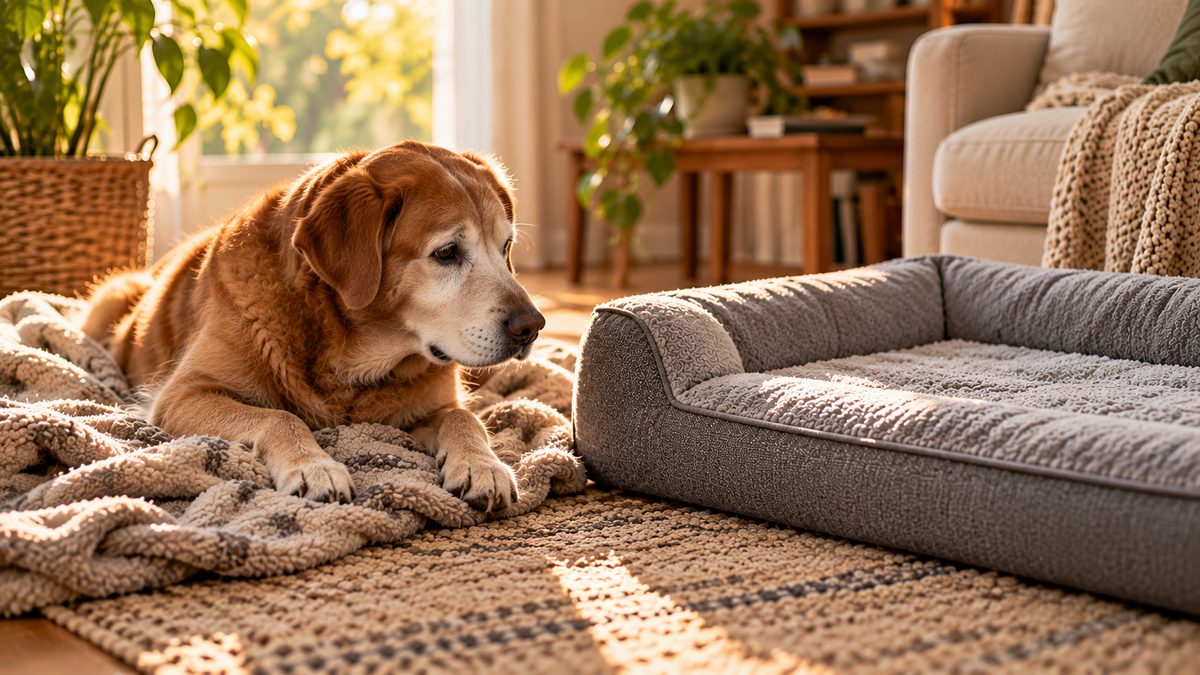
Older dogs are creatures of habit, and they do not always welcome a new bed on the first day. Put it beside the old one rather than replacing it. Add something that smells like them, a blanket or an old T-shirt, and let them find their own way to it.
Do not lift them in and do not hurry. Some dogs take a week, and then one evening you will find them lying there as though it had always been theirs.
A small note before you buy
Some of the links on this page are affiliate links, which means we may earn a small commission if you buy through them, at no extra cost to you. We only link to things we would be glad to see in your home. If you would like to see more options in one place, the Gifts for Pet Lovers page gathers them.
Questions People Often Carry
At what age does a dog need an orthopedic bed? There is no single age. Size, breed and health all play a part, and some large dogs benefit earlier than small ones. A better question is whether your dog is showing stiffness or hesitation, and a vet can help you read that.
Should an older dog’s bed be soft or firm? Supportive matters more than soft. A bed that feels plush but lets the hips sink to the floor does less for a stiff dog than one with a firmer base and a soft top.
My dog ignores the new bed. What should I do? Give it time and put it where he already sleeps. A familiar blanket on top helps. Forcing a dog onto a new bed usually makes it harder, not easier.
In this series
This is the third article in our series about the places our pets sleep. We began with how to choose a pet bed, then looked at cat caves and tunnel beds. Next come donut beds and cooling beds for summer, and the series ends with how a pet’s sleeping spot becomes something worth writing down in a pet memory journal.
“An old dog does not ask for much, only a place that holds him up and is still where the family is.”