
Not the version you imagined. The real one.
Life with a pet changes in ways that are almost impossible to explain until you’re already inside it. Not the big things — those you can prepare for, read about, anticipate. It’s the small, unremarkable dailiness of it that catches most people off guard.
If you’re wondering what life with a pet is really like, the answer is usually not found in the big moments. Most people expect the affection, the companionship, and the joy. What surprises them is how deeply an animal becomes woven into everyday life — quietly, gradually, and often without them realizing it until much later.
The way your mornings reorganize themselves around something other than your own needs. The way a room feels different when there’s another creature in it, even a quiet one. The particular kind of awareness that settles in — a low, constant attentiveness that you carry without noticing, until the day you realize it’s simply become part of how you move through the world.
This is what life with a pet actually feels like. Not the brochure version. Not the highlights. The whole thing — the texture of it, the weight of it, and the particular kind of fullness it brings.
The Dailiness Nobody Mentions
There’s a version of pet ownership that exists in imagination before the animal arrives — walks in soft light, a warm presence on the sofa, uncomplicated companionship. That version isn’t false. But it’s incomplete.
What nobody quite prepares you for is the routine. The relentlessness of it, in the best possible sense. Feeding times that don’t shift for how tired you are. Walks that happen in weather you’d rather stay inside from. The small, daily acts of care that become so familiar they stop feeling like effort — and start feeling like structure.
Many people, once they’ve lived with a pet for a while, find that this routine is one of the things they value most. Not despite the obligation of it, but because of it. It turns out that being needed, simply and consistently, does something to a person.
For many people, living with a pet becomes less about ownership and more about participation in a shared routine. What begins as responsibility often becomes one of the most meaningful parts of daily life.
The routine you didn’t choose becomes, eventually, the rhythm you can’t imagine living without.
The Silence That Isn’t Empty
One of the quieter surprises of life with a pet is what it does to silence.
A house with an animal in it is never quite empty in the way it was before. There’s a particular quality to coming home when something is waiting — not performing joy necessarily, not filling the room with noise, but simply being present in a way that registers. You feel it before you see it.
People who live alone with pets often describe this as one of the most significant changes. Not loneliness solved, exactly. Something more specific than that. A companionship that requires nothing of you conversationally, asks no questions, holds no expectations — and somehow, because of that, gives you room to simply exist.
The Way They Read You
Animals are attentive in a way that humans rarely are. Not because they’re more intelligent, but because they have very little else to attend to.
They notice your moods before you’ve named them. They adjust without being asked. They seem to understand, without language, when you need to be approached and when you need to be left alone. This kind of quiet perception — steady, unjudging, entirely without agenda — is something most people don’t expect to be moved by. And then they are.
There’s a reason so many people describe their pets as the ones who just knew. The ones who showed up at the right moment without being called. It isn’t magic. It’s just close, consistent attention — the kind that becomes its own form of care.
This is one reason so many people form such strong bonds with their pets. The connection develops through thousands of ordinary interactions rather than a handful of memorable events.
What You Carry Without Knowing It
Somewhere in the middle of life with a pet, things shift without announcement. The animal stops being something you have and becomes something you’re built around.
Your decisions begin to involve them automatically. Your sense of home expands to include them. The particular way they sleep, the sound they make when they’re content, the small habits they’ve developed around you — these things become part of how you understand your own days.
And then one ordinary afternoon, you catch yourself watching them and thinking: I don’t remember what this felt like before.
Not dramatically. Just quietly. The way most real things settle.
The Moments You Won’t Know to Photograph
The most valuable parts of life with a pet are rarely the ones that make it into pictures.
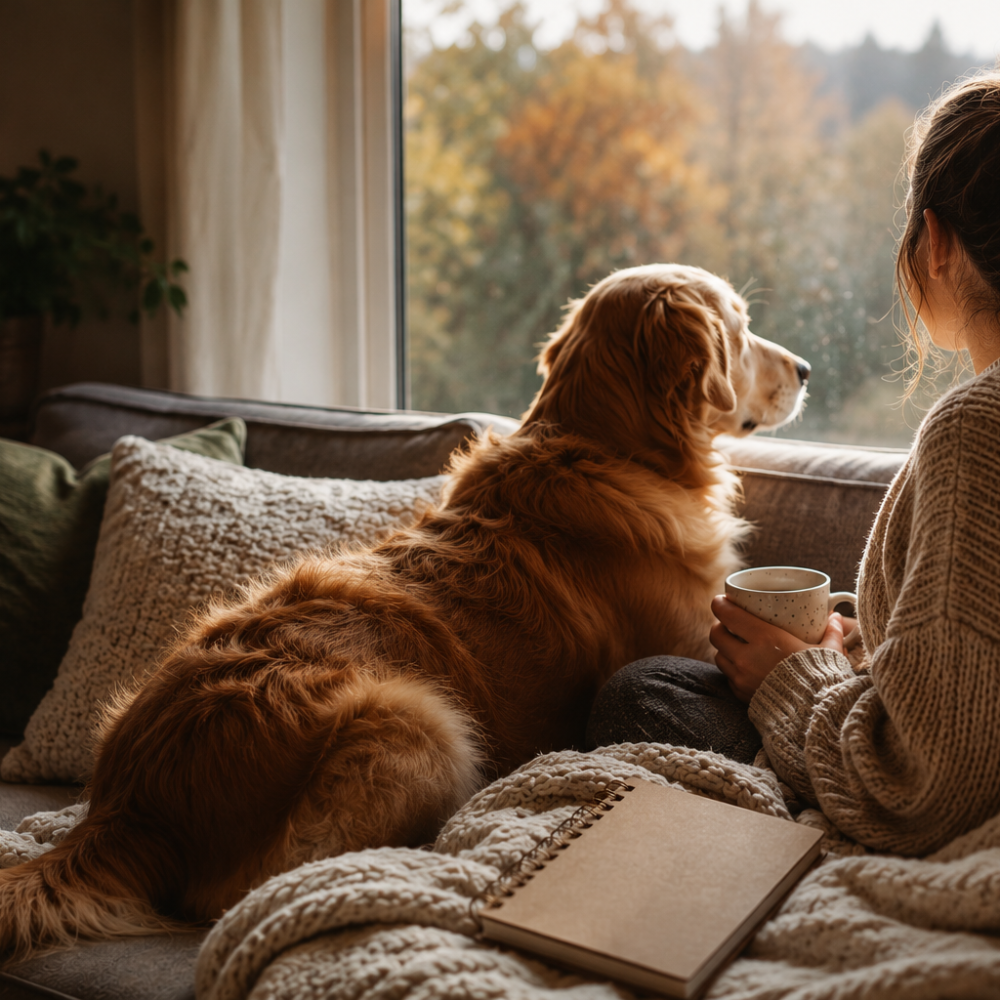
The way they always waited by the same window. The particular noise they made in their sleep. The Tuesday evening routine that nobody planned but both of you kept. These are the details that form the real texture of a shared life — and they are, without exception, the first ones to fade.
Memory is unreliable in proportion to how ordinary something was. The extraordinary gets photographed, told, retold. The ordinary — which is where most of life actually happens — slips. Not because it mattered less. Because it felt like it would always be there.
Most of what makes life with a pet meaningful happens in moments so ordinary that they rarely seem worth documenting at the time.
The Fullness, and What It Costs
To live well with a pet is to accept a particular kind of vulnerability. You are building a life with something whose life will almost certainly be shorter than yours. You are loving something you will, in all likelihood, have to let go of.
Most people know this in the abstract before the animal arrives. Very few understand it fully until they are already in it — already attached, already reorganized, already unable to imagine the house without them.
And still, the people who have lived this way — who have built their mornings around another creature’s needs, who have learned what it means to be quietly watched and quietly known — almost universally say the same thing when asked whether it was worth it.
They don’t hesitate.
Life with a pet is not an addition to a life. For the people it suits, it becomes the shape of one.
What they give you isn’t company, exactly. It’s something quieter — a reason to be home, a reason to be still, a reason to notice what an ordinary day is worth. — Horizon Memory
Perhaps that’s why so many people later find themselves searching for memories they never thought to preserve. Not the holidays or special occasions, but the routines. The habits. The little things that once felt too ordinary to matter.
Questions People Often Ask About Life With a Pet
What is life with a pet really like?
Life with a pet is usually defined less by special moments and more by everyday routines. Feeding, walking, caring, and simply sharing space with another living being gradually become part of daily life. Most people find that the relationship becomes deeper and more meaningful over time than they originally expected.
Does having a pet change your daily routine?
Yes. Most pet owners adjust their schedules around feeding times, exercise, care, and companionship. While this creates additional responsibility, many people eventually describe these routines as one of the most rewarding parts of pet ownership.
Why do people become so attached to their pets?
Strong attachment develops through consistent daily interaction. Pets become part of a person’s routines, home environment, and emotional life. Over time, the relationship often feels less like ownership and more like family.
What do people find most surprising about living with a pet?
Many people expect affection and companionship, but are surprised by how much comfort comes from simply sharing everyday life with an animal. The small routines and quiet moments often become the most meaningful memories.
The things we miss most are rarely the big moments.
They’re the ordinary ones.
The place by the window.
The sound of paws in the hallway.
The routines that felt too familiar to ever disappear.
The Horizon Memory Journal was created to help preserve those everyday moments while they’re still happening — before they become the memories you wish you had written down.