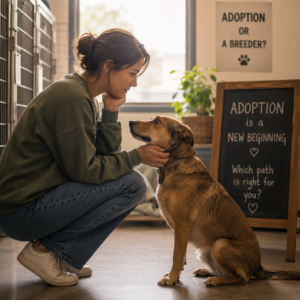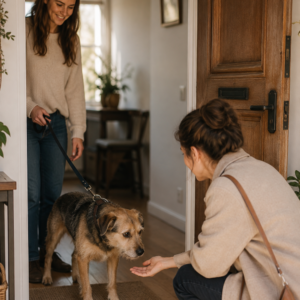
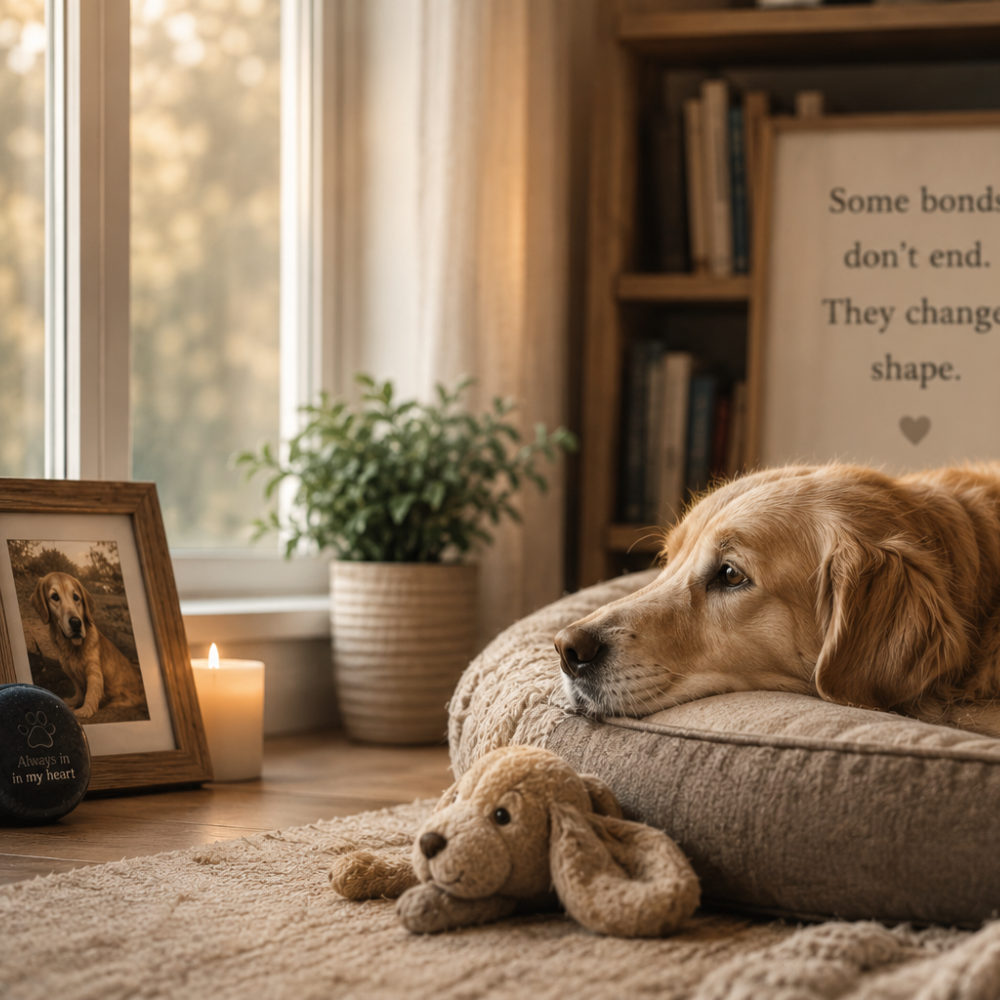
On the question nobody can answer for you — and what it actually means to be ready.
At some point after losing a pet, the question arrives. Sometimes from someone else — gently, well-meaningly, too soon. Sometimes from inside yourself, quieter and more uncertain. Sometimes it arrives as a feeling rather than a thought: a pull toward something warm and alive, followed immediately by something that feels like guilt.
When is it time to get another pet?
It is one of the most personal questions grief asks. And it is one that nobody — not a friend, not a vet, not a grief counselor, not a well-meaning article — can answer for you. But there are things worth knowing as you sit with it.
There is no right timeline
People get another pet two weeks after a loss, and it is exactly right for them. People wait two years, and that is exactly right too. People decide never to have another animal, and that is a valid answer to the question.
The timeline is not a measure of how much you loved the one you lost. Getting another pet quickly does not mean you have moved on too fast, or that the bond was shallow, or that you are replacing someone who cannot be replaced. Waiting a long time does not mean you loved more deeply or are grieving more correctly.
What matters is not when. What matters is why — and whether the reason comes from a place that is ready to welcome something new, rather than a place that is only trying to fill an absence.
The difference between filling a space and making room
There is a difference between getting another animal to fill the silence — to make the house less quiet, to have somewhere to put the grief, to feel less alone — and getting another animal because something in you has begun to open again toward that kind of love.
Neither is entirely wrong. Loneliness is real. The absence of an animal in a house that was shaped around one is a particular kind of quiet that is hard to describe to someone who hasn’t felt it. And sometimes, a new animal does help — not by replacing what was lost, but by giving the grief somewhere to go that isn’t only backward.
But it is worth sitting with the question honestly. Are you ready to love something new, on its own terms, as its own self — not as a continuation of what came before? A new animal is not a sequel. It is a different story, with a different character, and it deserves to be met as itself.
What “ready” actually feels like
Ready is not the absence of grief. You may love another animal while still grieving the one before — while still missing them, still thinking about them, still having days when the loss feels close. Grief does not have to be finished for new love to begin.
Ready is more like a shift in orientation. A moment when the thought of another animal feels less like betrayal and more like possibility. When you can imagine caring for something new without it feeling like a replacement. When the love you have, which has nowhere to go right now, begins to feel like something that could be offered again rather than only mourned.
That shift happens differently for everyone. For some people it comes suddenly. For others it builds slowly over months. For some it never fully comes, and that too is an honest answer.
On the guilt of wanting another
Many people feel guilty for wanting another animal — as if the desire itself is a kind of disloyalty, a signal that they have not grieved enough or loved enough or waited long enough.
It isn’t.
The capacity to love an animal is not a finite resource that gets used up. Loving again does not diminish what came before. The one you lost does not become less loved because love continues — because you continue, and love is part of how you move through the world.
The guilt is grief wearing a different face. It is the fear that moving forward means leaving behind. But memory does not work that way. The one you lost does not require your emptiness to remain honored. They are honored in the love that shaped you — including in the love you might offer to someone new.
What the new animal will not be
They will not be the same. They will not move the same way, or sleep in the same spots, or have the same habits or sounds or particular quality of presence. They will be entirely, sometimes frustratingly, sometimes wonderfully, their own self.
In the early days, that difference can feel like loss all over again — a reminder of who is absent rather than a presence in their own right. This is normal. It takes time for a new animal to become themselves in your life, to stop being a comparison and start being a relationship.
Give it time. Give them the chance to be new — not a replacement, not a consolation, but something that belongs to the next chapter rather than the last one.
If you’re not sure
Not being sure is a valid place to be. You don’t have to decide now. You don’t have to have an answer to a question that isn’t urgent. Sitting with the uncertainty — letting it be uncertain for as long as it needs to be — is not indecision. It is honesty.
When the time is right, you will probably feel it more than you will think it. Not as a certainty, but as a leaning. A pull that feels different from the guilt or the loneliness — quieter, more patient, more like an opening than an escape.
Trust that. And if it doesn’t come, trust that too.
Questions People Often Carry
Was it too soon to get another pet after losing one?
There is no too soon and no too late — only what is true for you. Getting another animal quickly does not mean you loved less or grieved less. It means you were ready, in your own way, on your own timeline. The bond you had with the one you lost is not diminished by loving again.
How do I know if I’m ready for another pet after loss?
Readiness rarely arrives as a certainty. It feels more like a shift — when the thought of a new animal moves from guilt toward possibility, when you can imagine caring for something new without it feeling like a replacement. Grief does not have to be finished for that shift to happen.
Is it a betrayal to get another pet after losing one?
It is not. The capacity to love an animal is not finite — it does not run out, and it does not belong exclusively to the one who is gone. Loving again is not forgetting. It is proof that what they gave you, the ability to love that way, did not leave when they did.
Will a new pet help with grief after losing a pet?
Sometimes, and not always in the way people expect. A new animal does not replace the one who is gone, and in the early days their differences can feel like loss all over again. But over time, a new relationship builds on its own terms — and the love that had nowhere to go finds somewhere new to live.
Loving again is not forgetting. It is proof that what they gave you — the capacity for that kind of love — did not leave when they did.