
Nobody thinks to write down the vet visit that went smoothly for once, or the exact treat that finally got a stubborn pill swallowed without a fight. The small rituals of care — the checkups, the medicine, the bath days, the car rides, the sitter who earned enough trust to be handed a house key — can feel too ordinary to record in the moment.
And yet, years later, these are often the details that become hardest to remember. Nothing about them seemed significant enough to write down at the time, which is exactly why so many of them quietly disappear.
This series has spent a while in that territory: the routine vet visit, the daily medicine negotiation, bath day, the unspoken rules of the car, and who watches them when you’re gone. None of it is glamorous. Added together, though, it’s much of what caretaking actually looks like — which raises an obvious question: where does any of it get kept?
Why the Small Rituals of Care Are the First Details Memory Loses
Milestones tend to stick. A first day home, a birthday, a memorable trip — these moments are easier to recall because they felt significant while they were happening.
The small rituals of care don’t get the same treatment. Nobody marks the calendar for the day a nervous dog finally sat calmly in a vet’s waiting room. The exact system that made medicine time stop being a daily battle may not seem worth recording either. These moments pass precisely because they feel routine.
That’s also why the details can become difficult to retrieve years later. Someone may remember that their pet needed regular vet visits without remembering which appointment unexpectedly went well. They may remember arranging pet care during trips but forget which sitter eventually became the trusted one.
General impressions tend to survive. Specific, ordinary details are easier to lose — unless something outside memory holds onto them.
What Belongs in the Journal Beyond the Big Moments
A pet journal can easily become a place for the obvious entries: first days, favorite toys, birthdays, funny photographs, and memorable milestones. But the small rituals of care deserve space there too.
A quick note about the vet who finally helped an anxious dog feel calmer can be worth keeping. So can the treat that worked for medicine time — and the one the dog eventually learned to detect. A treat made specifically for hiding pills — like Milk-Bone Pill Pouches — is often exactly the kind of small discovery worth writing down. The sitter who became part of the household’s travel routine has a place there as well.
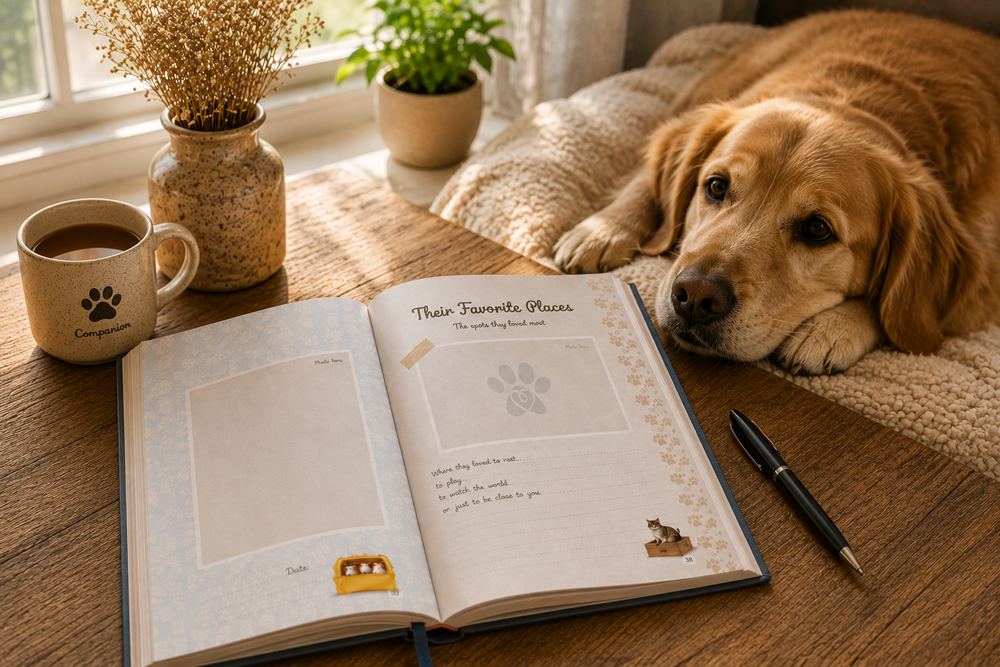
The hardcover Paws and Memories journal includes guided space for details such as personality, habits, favorite things, and everyday memories. Those ordinary observations can sit alongside the larger moments of a pet’s life rather than being treated as something separate.
An entry doesn’t need to be long or sentimental to matter later. Sometimes a line as simple as “finally figured out the pill trick: cheese, not peanut butter” preserves more of an ordinary day than a page of general reflection could.
The same idea works in a plain notebook. A short running record can be enough: a sentence after an unusual vet visit, a new discovery about car rides, or a note when a stubborn medication problem finally gets solved.
The point isn’t to document everything. It’s simply to catch a few details before they become the kind you assume you’ll always remember.
Why the Small Rituals of Care Are Easy to Undervalue
Milestones announce themselves. A first day home clearly deserves a photograph. A birthday feels like something worth marking.
Ordinary care rarely announces itself in the same way. A vet visit that goes smoothly doesn’t necessarily feel like an event. Neither does an uneventful car ride or the first bath that was noticeably easier than the one before it.
There’s no obvious signal saying: remember this.
That’s one reason a journal can be useful. Instead of waiting for something to feel important enough to record, a simple habit of occasionally noting what has changed can catch details that would otherwise pass unnoticed.
It doesn’t need to become another daily obligation. Even an occasional entry can preserve something surprisingly specific: She didn’t hide when the carrier came out today. Or: He finally slept through the whole drive.
Small observations, almost nothing at the time.
Later, perhaps not nothing at all.
Why Writing Down the Ordinary Parts Changes How You Notice Them
There’s another reason to record these rituals that has less to do with remembering them years from now.
Writing something down requires noticing it first.
A calm car ride may otherwise disappear into an ordinary Tuesday. So might the vet appointment that was slightly easier than the last one. But writing a single sentence about either means recognizing that something small has changed.
This echoes something explored in the small rituals of taking care of a pet more broadly. Much of caretaking happens in details too small to register as important while they’re unfolding.
A journal can preserve those details afterward, but it can also make them easier to see while they’re still happening.
And sometimes that is the more valuable part.
When These Small Entries Matter Most
As a pet grows older, familiar routines often begin to shift. There may be new medications, more frequent veterinary appointments, shorter walks, or different ways of getting comfortable in the car.
Against those changes, older journal entries can begin to read differently.
A note about a pill hidden in cheese isn’t merely a practical reminder anymore. It becomes evidence of one tiny problem that had to be solved for one particular animal. A sentence about a sitter or an unexpectedly calm vet appointment brings back a version of daily life that may no longer exist in quite the same way.
General memory can tell you that you cared for them.
The details show what that care actually looked like.
This is also part of the reason for keeping a pet memory journal in the first place. The spectacular moments often have photographs, dates, and stories attached to them already. The ordinary ones are much easier to lose.
The small rituals of care rarely feel as though they’re building toward anything while they’re happening. Written down, even occasionally, they become something else: a record of what sharing a life with that particular animal actually looked like, one ordinary day at a time.
Questions People Often Carry
Isn’t writing down practical details like vet visits or medicine tricks unnecessary compared with bigger memories?
Not necessarily. The practical details can be among the easiest to forget because they didn’t feel significant at the time. A short note preserves something specific without turning every routine event into a major journal entry.
How much detail is worth recording about something like a vet visit or car ride?
Very little may be enough. What changed, what worked, what didn’t, or how your pet responded can fit into a single sentence. The goal isn’t to create a perfect record of every event.
Should practical entries go in the same journal as more sentimental memories?
They can. In fact, keeping both together can create a fuller picture of life with a pet. Favorite memories and ordinary caretaking aren’t really separate parts of the relationship — they’re happening alongside each other all the time.
Is it too late to start recording these details if my pet is already older?
No. You don’t need a complete record beginning with the first day for a journal to have value. Starting now still preserves the routines, quirks, and ordinary moments happening today.
The parts of care that felt too small to mention are usually the ones worth keeping most.