
On stillness, patience, and the quiet world behind the glass.
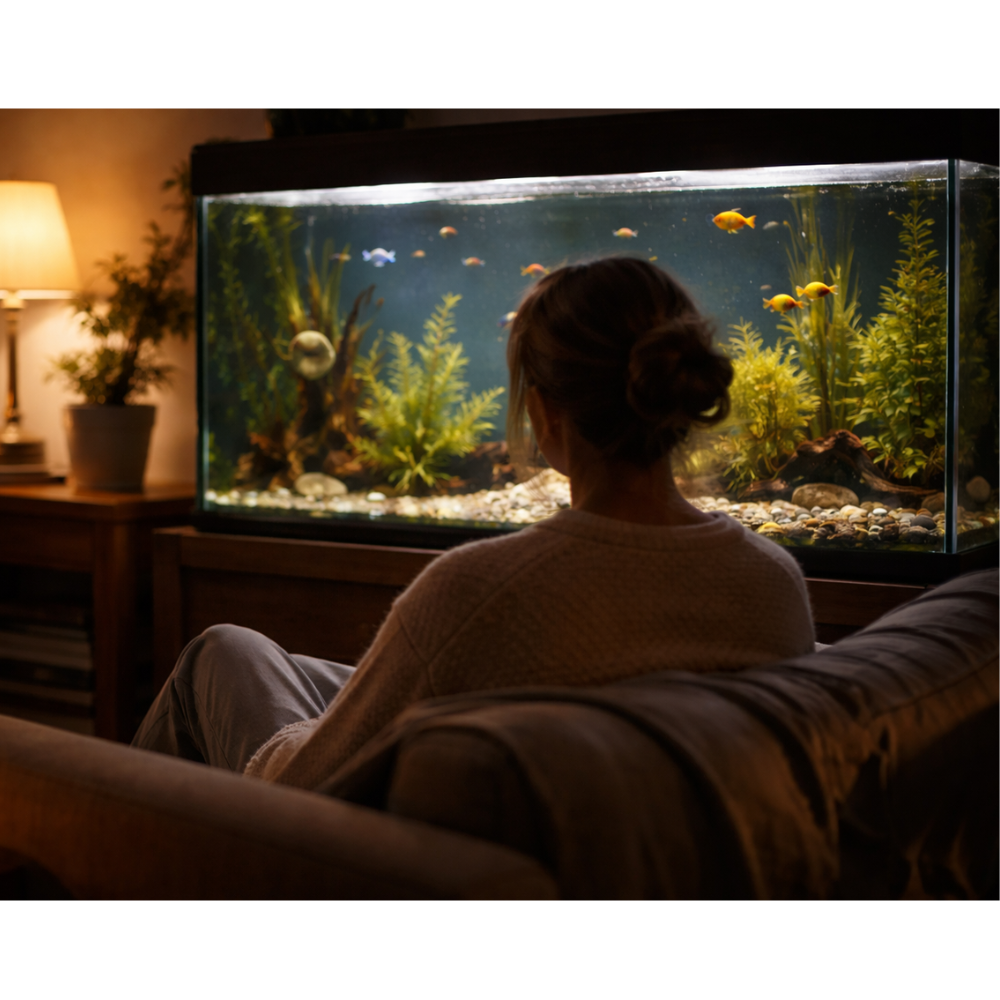
It was late, well past the hour when most sounds in the house had gone quiet. The lamp on the desk was off. The only light in the room came from the tank — that particular blue-green glow that aquariums cast, soft and diffuse, like something between dusk and underwater. The fish were moving the way they always do at that hour: slowly, without apparent purpose, tracing the same loose paths through the water that they would trace again tomorrow. Nothing was happening, exactly. And yet there was something absorbing about standing there in the half-dark, watching.
That quality of attention — drawn in without being demanded — is probably the truest thing about living with an aquarium. It doesn’t ask anything of you. It simply continues, whether you notice it or not. And somehow that’s the thing that makes you keep noticing.
But before that quiet becomes part of your home, there’s a real question worth sitting with: is an aquarium the right fit for your life?
What the Days Actually Involve
The image people have of an aquarium before they own one tends to be all atmosphere and no maintenance. In reality, the atmosphere is real — and so is the work behind it, though it’s a different kind of work than most people expect.
It’s not constant or physically demanding. But it’s consistent. Water parameters drift slowly and need checking. Glass surfaces cloud with algae if left too long. Filters require attention on a schedule that isn’t dramatic until you ignore it, and then suddenly is. Partial water changes become part of the week the way other small household tasks do — unremarkable when done, quietly consequential when skipped.
What’s particular about aquarium care is how much of it is invisible in its effects. A healthy tank looks effortless because the work went in steadily before anything went wrong. There’s no visible reward in the way that, say, cleaning a floor offers one. The tank just continues looking like itself. That invisibility suits some people well. For others, it makes the motivation harder to sustain.
And then there’s the learning curve that arrives before the calm. Establishing a tank takes time — weeks, sometimes longer — before the water chemistry stabilizes enough to be hospitable. New fish owners who don’t know about this phase often feel like they’re failing when they’re simply waiting. Patience here isn’t a virtue so much as a literal requirement.
What It Feels Like to Live Alongside One
Once a tank is settled and stable, what it adds to a room is difficult to describe cleanly. It’s not quite like having another living thing present — not in the way a cat on the sofa is present, or a dog that lifts its head when you enter. The fish don’t register you in any way you can easily perceive. They move through their water. You move through your room. There’s a kind of parallel existence to it.
And yet it doesn’t feel cold. The light shifts through the water in a way that changes with time of day. Plants — if you keep them — grow in slow motion you only notice when you look closely. Certain fish develop habits, preferred corners of the tank, specific behaviors at feeding time that you start to recognize. Connection forms here, but it forms differently than it does with animals that meet you halfway. It asks more of your attention, less of your emotion. You bring the meaning; the tank holds it quietly.
There’s something you begin to notice after a while. Watching moving water and small creatures has a quieting effect on your mind. Most people who keep aquariums discover, without planning to, that they spend more time in the room where the tank lives. They find themselves pausing there when they walk past. The aquarium becomes a kind of anchor point in the house, a place where the pace of things is always the same, regardless of what’s happening everywhere else.
The Kind of Person This Tends to Suit
There’s no single profile, but certain tendencies make the aquarium relationship feel natural rather than effortful. People who find something satisfying in maintaining systems — who don’t mind the small, regular acts of upkeep that accumulate invisibly into a good result — tend to settle into aquarium keeping without much resistance. The rhythm of it fits how they already move through tasks.
So do people who like to observe more than to interact. There’s a particular pleasure in watching something you’ve created and sustained — a small, functioning world that follows its own logic — and not needing it to respond to you. If that kind of one-directional appreciation feels satisfying rather than lonely, an aquarium may give you more than you expected.
It also suits lives that have some predictability in them, not because the tank is fragile, but because irregular care over time does accumulate into problems. People whose weeks follow a rough pattern — even a loose one — find it easier to work the tank’s needs into the existing shape of things, rather than trying to remember when they last checked the water.
When It Might Not Be the Right Choice
This deserves to be said plainly, without discouragement behind it.
If what you’re looking for is something that acknowledges you — that greets you, that responds when you’re sad, that gives you the sense of being known — an aquarium won’t provide that. It can offer genuine calm and a kind of companionable presence, but the relationship doesn’t move in both directions in any obvious way. Expecting it to, and then feeling the absence of reciprocity, is a particular kind of disappointment that’s worth avoiding by being honest with yourself first.
Periods of significant life instability — frequent moving, long travel, genuinely chaotic schedules — also make aquarium keeping harder than it’s worth. Not impossible, but the tank needs someone reliable in the picture. It doesn’t adapt to disruption the way some animals can. It simply declines slowly, and by the time the decline is visible, a good deal has already gone wrong beneath the surface.
And if the initial phase of learning and adjustment feels like too much to hold right now — the chemistry, the cycling, the early losses that sometimes happen — it may be worth waiting for a calmer window. Starting an aquarium during an already-stretched period tends to make both the tank and the person feel like they’re managing, rather than thriving.
What It Becomes After Years
Long-term aquarium keepers often describe something that’s hard to put into words at first. The tank stops being a project and becomes part of the house in the same way certain furniture does — background, essential, quietly defining of the space. You notice it less consciously but more continuously. It changes the light in the room. It changes the sound, slightly. It changes the feeling of being in that room at the end of the day.
Some fish live for years. You begin to know their particular movements, their small claims on different parts of the tank, the way the group rearranges itself over time as members arrive and others are lost. There’s something in that accumulation — years of small observations, years of routine care — that starts to feel like a relationship even though it resists that word in the conventional sense. You’ve simply been paying attention to something for a long time. And sustained attention, directed at any living thing, tends to become something you find you value.
The tank holds the shape of all that time without announcing it. It just continues its slow, lit life in the corner of the room, the same as always, while everything around it moves and changes. There’s something stabilizing about that. Something worth having, if you go in knowing what it is.
Questions People Often Carry
Is an aquarium a lot of work?
More than most people expect before they start, and less than they fear once they are settled into it.
The work is not constant or physically demanding — but it is consistent. Water parameters need checking, filters need attention, and partial water changes become part of the weekly routine.
The effort is invisible when done steadily, and quietly consequential when skipped.
What suits aquarium keeping is not low effort, but reliable effort — small and regular rather than occasional and intense.
Is an aquarium a good pet for a busy person?
It depends on the kind of busy.
An aquarium doesn’t need walking or daily interaction the way a dog or cat does. But it does need consistent maintenance on a schedule — and that schedule doesn’t flex easily.
If your life is unpredictable in ways that make routine hard to maintain, an aquarium may create more stress than calm.
If your busyness is structured and you can build small regular tasks into your week, it can fit well.
Do fish know their owners?
Not in the way dogs or cats do.
Fish don’t register you in any way that’s easily perceived — they move through their water while you move through your room.
But many fish develop recognizable habits: preferred corners of the tank, specific behaviors at feeding time, patterns you begin to notice after a while.
Connection forms here, but differently — it asks more of your attention and less of your emotion.
You bring the meaning; the tank holds it quietly.
Is an aquarium good for mental health?
Many people who keep aquariums discover, without planning to, that they spend more time in the room where the tank lives.
Watching moving water and small creatures has a quieting effect on the mind — not dramatic, but real.
The aquarium becomes a kind of anchor point in the house, where the pace of things is always the same regardless of what’s happening everywhere else.
Whether that counts as good for mental health is personal, but the effect is widely reported and genuinely felt.
Some presences don’t speak to you. They simply exist, steadily, in your corner of the world — and over time, without quite meaning to, you find you’ve arranged your life a little around the light they give.
If you’re somewhere in this question — considering an aquarium for the first time, or already years into the quiet rhythm of one — we’d love to hear your story. The first tank, the one that didn’t go well, the one that changed how a room felt. These moments are worth keeping somewhere.
You’re welcome to share yours on our Stories page. There’s no particular format, no length requirement. Just the memory, whenever you’re ready to write it down.