
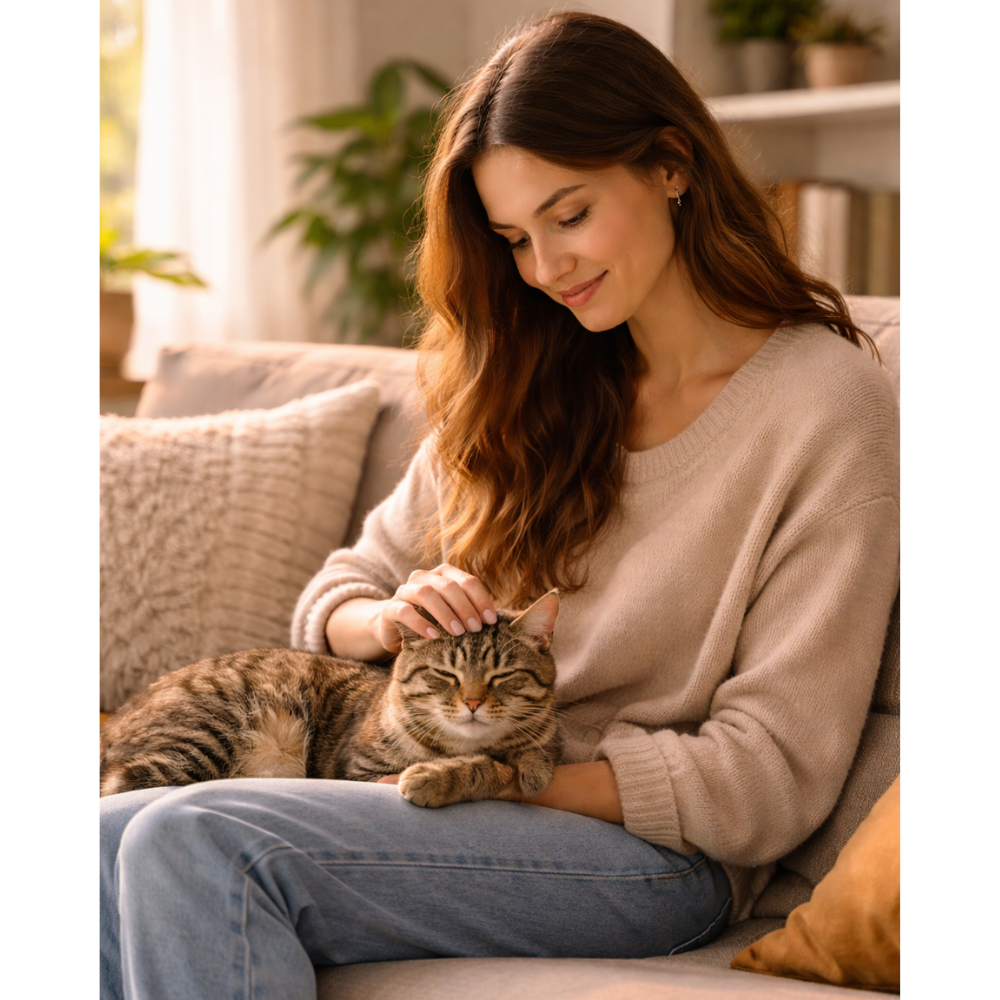
Cats have a way of making themselves at home in a space before you’ve fully decided they belong there. They find the one warm patch of sunlight on the floor, claim it without ceremony, and fall asleep as though the apartment was always theirs. It happens gradually, then completely. And somewhere in that process, something shifts in how the space feels — quieter, but also somehow more inhabited.
When people start asking themselves which pet is right for you, this is often the kind of difference they’re trying to understand. Not just which animal they like, but what kind of presence actually fits the life they’re living.
This is probably the most honest introduction to what life with a cat is actually like. It’s not a dramatic arrival. It’s a slow, lateral settling — into your routines, your furniture, your peripheral vision. And whether that suits you, whether that particular texture of companionship is what you’re looking for, is worth thinking about honestly before you begin.
The Shape of a Cat’s Presence
One of the things people say most often about cats — usually with a mix of affection and mild bewilderment — is that they’re unpredictable. This is true, but it’s only part of the picture. Cats are actually quite consistent once you learn their language, which is subtler and less demonstrative than most people expect.
A cat who chooses to sit near you, not on you, is still choosing you. A slow blink across the room is a form of trust. The way a cat presses the top of its head against your hand for exactly three seconds and then walks away is not rejection — it’s contact on its own terms. Understanding this changes the relationship entirely. You stop waiting for something bigger and start noticing what’s already there.
Psychologists sometimes describe a phenomenon where, once you become attuned to something, you begin perceiving it everywhere — not because it’s more frequent, but because your attention has recalibrated. Living with a cat works a little like this. The more you learn to read their particular kind of communication, the more communication you find. The twitching tail. The specific meow reserved for early mornings. The way they position themselves in a room in relation to where you are. What looked like indifference turns out to be a whole vocabulary.
Independence Is Real — and It’s Not a Flaw
There’s a persistent idea that cats are solitary, that they don’t really need you, that having a cat is somehow less than having a dog in terms of emotional return. This flattens something that’s actually more interesting.
Cats are independent in ways that are genuine, not performed. They don’t need you to structure their day. They sleep when they want, play when they want, seek contact when they want. This is not aloofness — it’s a different architecture of need. And for some people, this is precisely what makes the relationship so good.
If your own life has a lot of movement in it — irregular hours, stretches of travel, weeks where work pulls you somewhere else entirely — a cat fits into that with a flexibility that’s hard to overstate. They don’t require your presence to feel okay in the same immediate way a dog often does. The house doesn’t fall apart emotionally when you’re gone for a day. They’re content in a way that doesn’t hinge entirely on your proximity.
For someone who already carries a lot of responsibility, or who simply values freedom and quiet, this can feel like relief rather than lack.
The Quiet Emotional Dynamic
What surprises people most, once they’ve lived with a cat for a while, is how emotionally resonant the relationship becomes — even though so little of it is loud or obvious.
There’s something specific about the way a cat finds you when you’re unwell. They don’t make a fuss of it. They just appear — on the bed beside you, or near the couch — and stay. They’re not performing comfort. They’re just present, in the way that sometimes matters more than words or gestures.
The emotional dynamic with a cat tends to be one of gradual deepening. The first weeks, you’re still learning each other. Then slowly, without marking the moment, you’re fluent in something together. You know which sounds mean hunger and which mean something else. The cat knows the particular stillness that means you’re reading versus the particular stillness that means you’re sad. The relationship grows in the direction of knowing, quietly, over time.
This suits people who are patient with things that develop slowly. Who don’t need immediate, obvious feedback to feel the relationship is real. Who find intimacy in small, repeated moments rather than in grand gestures.
What Your Home Life Actually Looks Like
Cats are deeply sensitive to the atmosphere of a home, even if they don’t show it the way a dog would. A stable, calm household suits them. They thrive in homes where the rhythm is relatively consistent — not rigid, but readable. They notice when things shift: a new person, a moved piece of furniture, a change in your sleeping schedule. They adjust, usually. But they adjust better when the baseline is settled.
This is worth thinking about in terms of your own domestic life. Not whether it’s perfectly ordered — no life is — but whether your home is a place you return to. Whether it has a quality of rest in it, even occasionally. Cats do well in apartments. They do well in houses. They do well in small spaces where they’re genuinely included and in larger spaces where they have room to disappear for a while. Square footage matters less than the quality of attention.
What they find harder is a home that feels like a transit point — where people are rarely still, where noise and movement are constant and irregular, where no one is quite paying attention. This isn’t about noise level exactly. It’s about whether the home has any quality of ease in it.
The Kind of Person Who Finds This Natural
There’s no clean profile. But certain tendencies show up reliably in people who seem to have particularly good relationships with cats.
People who are comfortable with ambiguity — who don’t need every interaction to be clearly legible. People who appreciate dry humor, in a sense: the cat who sits pointedly outside the door you’ve closed, the precise timing of a cat choosing to sit on the one thing you need right now. People who can find something funny rather than frustrating in being lightly ignored.
People who have a full inner life and value solitude without needing it to be lonely. Cats are good companions for people who spend time reading, writing, thinking, or working quietly at home. They fill a room without demanding anything from it. They’re company that doesn’t interrupt.
There’s also something to be said for people who were drawn to cats as children — who found something appealing in their reserve rather than off-putting. That early instinct often points toward a genuine compatibility.
Where the Fit Can Feel Off
Without being prescriptive about it, some lives are simply a harder match for a cat, at least right now.
If you’re someone who needs reciprocal, demonstrative connection — who finds warmth primarily in obvious affection — a cat’s subtler expressions can feel like a gap that never quite closes. The cat is offering what it has. But if what you’re looking for is something that meets you loudly and reliably, you may spend the relationship waiting for something that isn’t coming.
Similarly, if your life is chaotic in a way that feels less like interesting unpredictability and more like instability — frequent moves, genuinely uncertain circumstances, a home that doesn’t feel like yours yet — it’s worth asking whether this is the right season for an animal whose wellbeing is tied, in quiet ways, to a sense of place.
None of this is permanent. Lives change. What doesn’t fit now might fit well in two years. The question is always just: what is true right now?
What the Long Middle Looks Like
Cats live a long time — fifteen years is common, and more is not unusual. The bulk of that time is not dramatic. It’s ordinary in the best sense: mornings with a cat somewhere in the kitchen, evenings with a weight at the end of the bed, the particular sound of purring that you stop noticing as sound and start receiving as texture.
There are moments that crystallize. The first time a cat falls asleep in your lap, fully, without reservation. The way they slow down as they get older and become somehow more themselves — more settled, more particular, more yours. The strange fact that an animal who never says a word can become one of the most familiar presences in your life.
You don’t build this relationship in one moment. You live alongside it, and it builds itself out of thousands of quiet, ordinary interactions that barely seem important at the time.
A cat doesn’t ask you to be more than you are. It simply finds you, wherever you’ve settled, and decides that’s enough.
Share Your Story
If you’ve ever wondered whether a cat was the right fit for your life — or if you’ve already lived your way into that answer — you’re not alone.
The Stories page is a place for these quieter realizations too. The slow beginnings, the subtle matches, the kinds of companionship that don’t announce themselves loudly, but become deeply real over time.
Questions People Often Carry
Are cats good pets for people who work full time?
Generally yes — cats are better suited to being alone during the day than most dogs. They don’t need walks, and they are more tolerant of solitude.
But “tolerant” doesn’t mean “unaffected.”
Cats that are left alone for very long stretches without stimulation or company can become bored or withdrawn.
What helps is providing enrichment — things to look at, things to climb, a window with a view — so the time alone has texture rather than just silence.
Do cats actually like their owners, or are they just tolerant?
They like their owners — but they express it differently than dogs do, and that difference is easy to misread.
A cat who chooses to sit near you, not on you, is still choosing you. A slow blink across the room is a form of trust.
The way a cat presses its head against your hand and then walks away is not rejection — it’s contact on its own terms.
Learning to read those signals changes the relationship entirely.
Are cats low-maintenance pets?
Lower-maintenance than dogs in terms of daily time commitment, but not maintenance-free.
They need regular feeding, a clean litter box, veterinary care, and more social interaction than their reputation suggests.
A cat that seems fine on its own is not always fine — they simply don’t protest visibly when something is wrong, which makes it easy to miss.
Paying attention to changes in behavior matters more than it does with animals that communicate distress more obviously.
Is it better to get one cat or two?
For many cats, particularly younger ones, a companion of their own kind makes a real difference — especially if they will be alone during the day.
Two cats don’t simply keep each other company; they also tend to be more active, more playful, and less likely to develop the quiet restlessness that can come from prolonged solitude.
The adjustment period when introducing two cats takes patience, but for most people who do it, the result is worth it.


